Depressed? Hopeful? A little bit of both?
The elections in Israel were powerfully consequential, but you might not pick that up from the news. What you are likely to hear is that the process is incomplete and that the future of the state is impossible to discern.
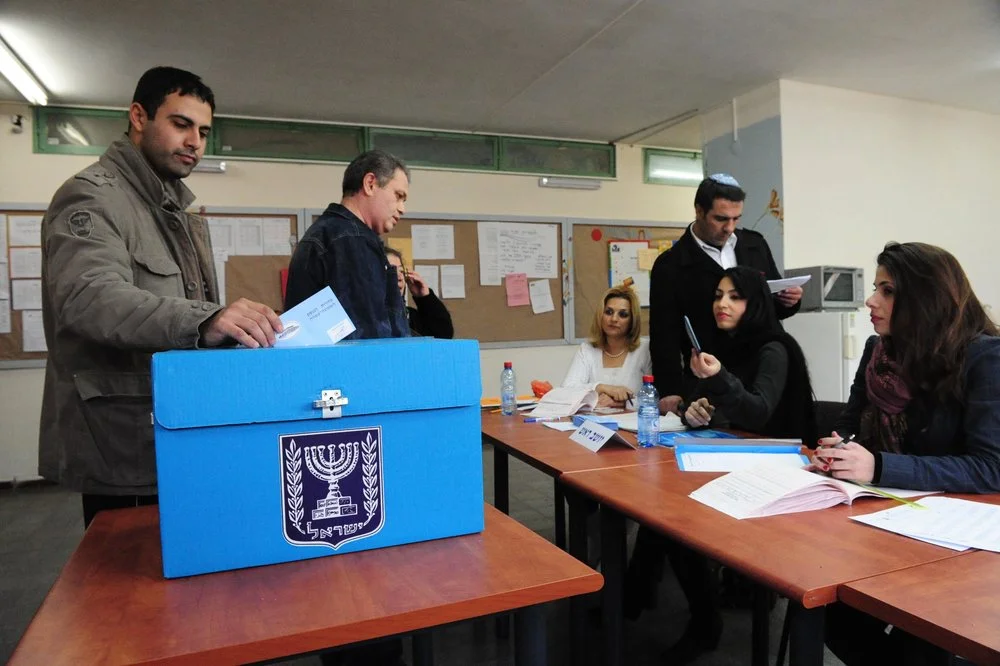
On one level, of course, that’s entirely true. First came the exit polls and then the actual count. Paper ballots in Israel are tabulated by hand and then reported to regional counting centers. One broadcaster estimated that this would take until Friday, but it turns out that the process moved more quickly than expected; the actual vote counts have now been delivered.
In an American election that would (sort of) be the end of it. The real issue is the difference between systems of government. Israel is a unicameral parliamentary democracy in which voters choose parties and the parties choose candidates. In order to have its way in the Knesset, a party must do one better than 60 officeholders. If it can’t win a given election outright, it must do the work of building a coalition: parties willing to crawl into bed together and govern in a sometime uneasy marriage.
That’s exactly what began to happen this week. Netanyahu’s party won the largest number of seats but did no better than an un-magical 26. Eisenkot’s party did slightly worse with a final total of 21 seats. Neither could hold power without a coalition, but their “normal” partners were also insufficient. The Netanyahu bloc came to 53. The Eisenkot bloc now totals 48. Significantly, both men will be required to compromise. In Netanyahu’s case, that will prove especially problematic since his likely partners will be the ultra-Orthodox who will cling ferociously to draft exemptions for their followers.
But beyond this there is another challenge, much more significant than any other. The worst thing about this election is that it is not over. The second worst thing is the racism it foregrounded. Netanyahu sank to a reptilian low, claiming that the Arabs stole the election. He was talking about Arab citizens of Israel, charging that they somehow rigged the outcome.
The best thing about this election is that they voted at all. That is cause for genuine celebration. After years of standing outside the system, Arab voters turned out in force, qualifying for 19 seats in the next Knesset. That comes close to reflecting their percentage of the population, meaning that most Israeli citizens—Jewish and Arab—rejected the leadership of Benjamin Netanyahu. The Arab parties could crown Eisenkot tomorrow.
The problem is that neither bloc has opened itself to Muslims. Netanyahu sees them as fundamentally illegitimate. Eisenkot has left himself room to maneuver but is unlikely to embrace the winning Arab parties out of a fear for his long-term legitimacy among Jews. All of this is deeply embedded in the Israeli psyche and will require powerful shifts in the dynamics of feeling and power.
But for the sake of the State it would represent a real step forward. Nothing important will happen immediately. We are no longer talking about lofty ideals like a two-state solution or giving West Bank Arabs the vote. Those possibilities are absolutely moribund. But what is possible now is a new alliance of convenience: Israeli Arabs in the next government of Israel. There are many reasons to believe that it will never happen, but it appears to be one of the few ways forward. Between despair and hope, I am inching toward hope.
—
I did not ask AI to draft this article and then represent it as my own. This work is mine.